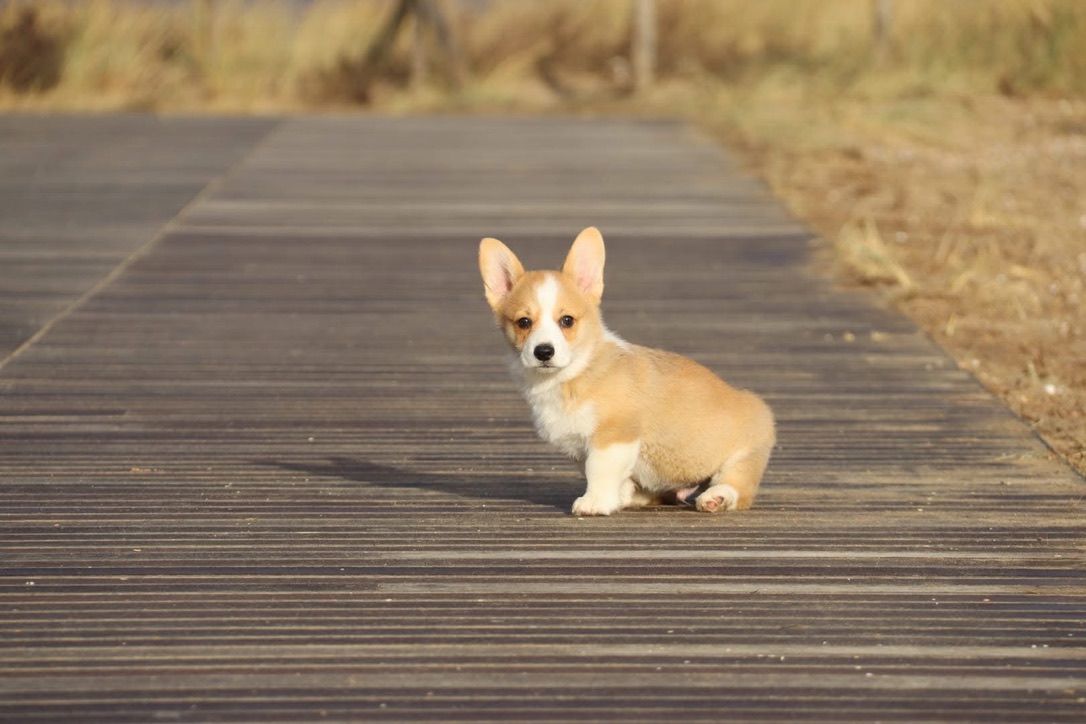
In this new blog post, we’re going to talk about the Corgi—a breed that is energetic, intelligent, and affectionate. It is a small herding dog with short legs, a long back, and a distinctive, fox-like appearance. Corgis fall into two breeds—the Pembroke Welsh Corgi and the Cardigan Welsh Corgi—which differ from one another in build, temperament, and origin.
The Pembroke Welsh Corgi
The Pembroke originates from Pembrokeshire in Wales and is often somewhat smaller and lighter than the Cardigan. They are usually slightly shorter, and the Pembroke also comes in a tailless variety, although this is becoming increasingly rare. The Pembroke Welsh Corgi’s temperament is described as affectionate, alert, and sometimes a bit stubborn. These dogs weigh around 10–14 kg.
The Cardigan Welsh Corgi
The Cardigan Welsh Corgi originates from Cardiganshire in southwest Wales. This breed is often somewhat larger and sturdier in build than the Pembroke, although this varies from dog to dog. The Cardigan weighs around 11–17 kg. Its temperament is described as calmer and more thoughtful, and it is often the family clown.
Original function
Although the two breeds have different origins, they were bred for a similar purpose. The Cardigan was bred to drive livestock forward, moving animals from one destination to another. Their low-slung build is advantageous here, as it allows them to dodge a cow’s legs when the animal attempts an unexpected backward kick. They also had to protect the livestock from predators such as foxes. These dogs were often employed as farmyard guardians; consequently, they are very alert and may signal their watchfulness by barking at home. The Cardigan is thus a versatile dog, serving as a herder, guardian, and protector.
The Pembroke Welsh Corgi is also a true herder, but it works by moving quickly around the herd and nipping at heels, darting away at lightning speed whenever the livestock kicks back.
Health
Because the Corgi has a long back and short legs, it is prone to back problems; therefore, it is important to avoid climbing stairs or jumping off furniture—such as the sofa—as much as possible. Being overweight can also quickly increase the risk of back and joint issues.
Training
Both Corgi breeds are high-energy dogs that require a clear, consistent owner. Because they are so intelligent, they quickly devise their own solutions to problems—even ones the owner considers undesirable. A key point to address during training is their tendency to nip at heels; given their genetic background, they may well try this out on runners or children. It is therefore important for owners to be aware of this and prevent the behavior right from the start. They also have a natural instinct to keep their “herd” together, and the family can easily become that herd. A Corgi loves interacting with you and needs that engagement to avoid becoming a nuisance at home. Corgis are ideally suited for fun mental challenges—such as Hoopers or scent detection—and will thoroughly enjoy activities like these.