Create Your Own Army of Protection
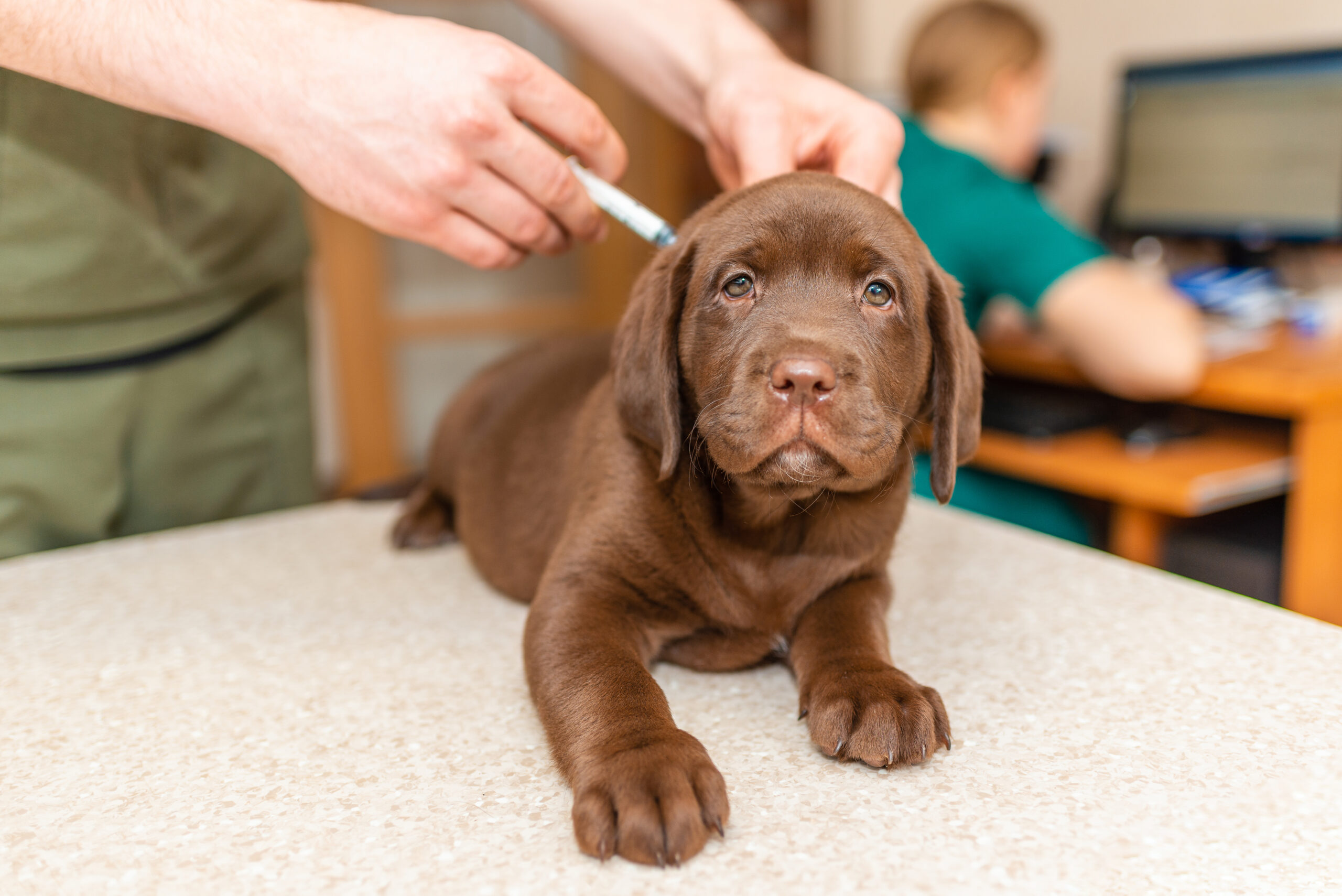
In this blog, we will tell you everything about vaccinations and why they are important. A puppy’s immune system is not yet fully developed at birth, which is why vaccinations are so crucial. Vaccinations protect your puppy against pathogens by activating the immune system. Therefore, you can think of the immune system as the soldiers of your puppy’s body. This way, your puppy’s body can fight off harmful pathogens more effectively if your pup becomes infected.
Protection from the Mother
Puppies also receive some initial protection from their mother, passed on through the mother’s milk. These are called maternal antibodies. They protect the puppy against the pathogens the mother has been vaccinated against or illnesses she has previously encountered. Unfortunately, this protection is not long‑lasting and will gradually decline. Maternal immunity is usually diminished by the time the puppy is 14–20 weeks old.
Vaccination Schedule
Because the mother’s antibodies decrease and the puppy has not yet built its own army, it is very important to vaccinate your puppy. To protect your puppy as well as possible, three vaccinations are needed. The first vaccination is often given by the breeder at the age of 6 weeks. This vaccination provides initial protection against distemper and parvovirus. To ensure optimal protection, a second and third vaccination are required at around 9 and 12 weeks of age. The puppy will then build immunity against distemper, parvovirus, leptospirosis, and HCC.
Vaccination for rabies
It is mandatory to vaccinate puppies at 12 weeks of age against rabies if they come from abroad or travel internationally. It takes 3 weeks for the rabies vaccine to take effect, meaning the puppy is only allowed to cross the border once they are 15 weeks of age. If you plan to bring your puppy to a dog daycare or another place where it will be in frequent contact with other dogs, it is wise to vaccinate your dog against kennel cough.
Vaccination at an Older Age
After 1 year, a booster vaccination is needed. After that, you can choose to give your dog a yearly booster or to perform a titer test. A titer test checks whether your dog still has enough antibodies and therefore does not need a booster. If the antibody level is too low, the dog will still require vaccination.